
Posebyen
Wooden-house quarter in the north of Kvadraturen
The northern part of the 1641 street grid is still made up of wooden houses. It survived the town fire of 1892 and is the counterpart to the brick-built Murbyen to the south.
On this page
About Posebyen
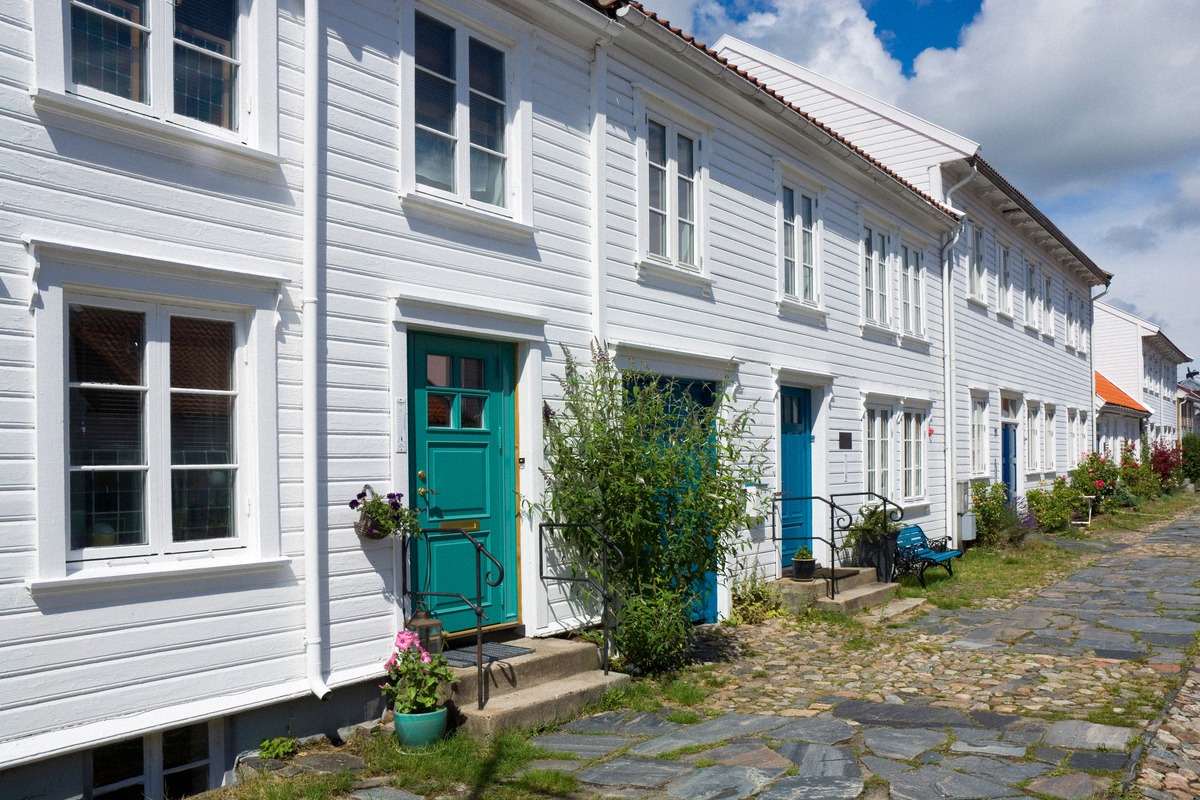
Posebyen is the district of wooden houses in the north of Kvadraturen, the street grid that Christian IV had laid out in 1641. The streets follow the same right-angled pattern as the rest of the centre, but here the buildings are mostly timber. Posebyen is one of the largest continuous areas of white wooden houses in northern Europe.
To the south, the district ends at the street called Mølla. Beyond it lies Murbyen, the brick-built part of the centre. As you stroll around you can see the difference: wooden façades north of Mølla, masonry houses to the south.
Origins and fires
Kristiansand was founded in 1641, and the wooden town has suffered several fires since. In 1859 came the Østerbrannen fire, followed in 1892 by the great town fire, which destroyed around a third of the wooden houses.
Posebyen is the part that survived the 1892 fire, which is why some houses still date from the late 17th and early 18th centuries. The burnt-out districts to the south were then rebuilt, this time in brick or stone, and so Murbyen came into being.
Houses and courtyards
A few buildings are worth seeking out:
- Ekserserhuset, Tordenskjolds gate 64, built 1807-08
- Bentsens Hus, Kronprinsens gate 59, from 1855
- Sløyden, Gyldenløves gate 70
- Café Blåstua, Gyldenløves gate 60
Ekserserhuset and Bentsens Hus show the span of building periods: one went up shortly after 1800, the other in the mid-19th century. Both are older than the Østerbrannen fire of 1859 and the town fire of 1892. Café Blåstua also makes a good place for a break along the way.
Posebyhaven and the summer market
Posebyhaven is run by the Foreningen Posebyen association. Here you will find cafés, small shops and a bakery, and there are concerts in summer.
In summer a market is held on Saturdays. If you are in town on a summer Saturday, you can combine a wander around the district with a visit to the market.
Beyond Posebyen
From Posebyen, head south across Mølla into Murbyen and on to Torvet and Kristiansand Cathedral. Right on the north-western edge of the centre is Baneheia, an area of woods and lakes.
More historic buildings can be seen at the open-air Kristiansand Museum. You will find everything to see in the city under Sights.